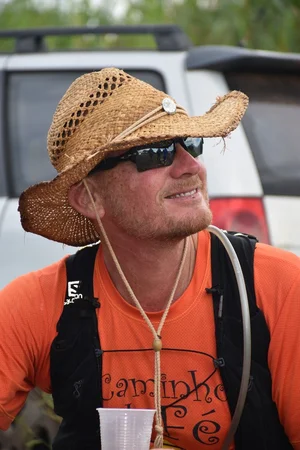
A Sensory Feast On The Camino
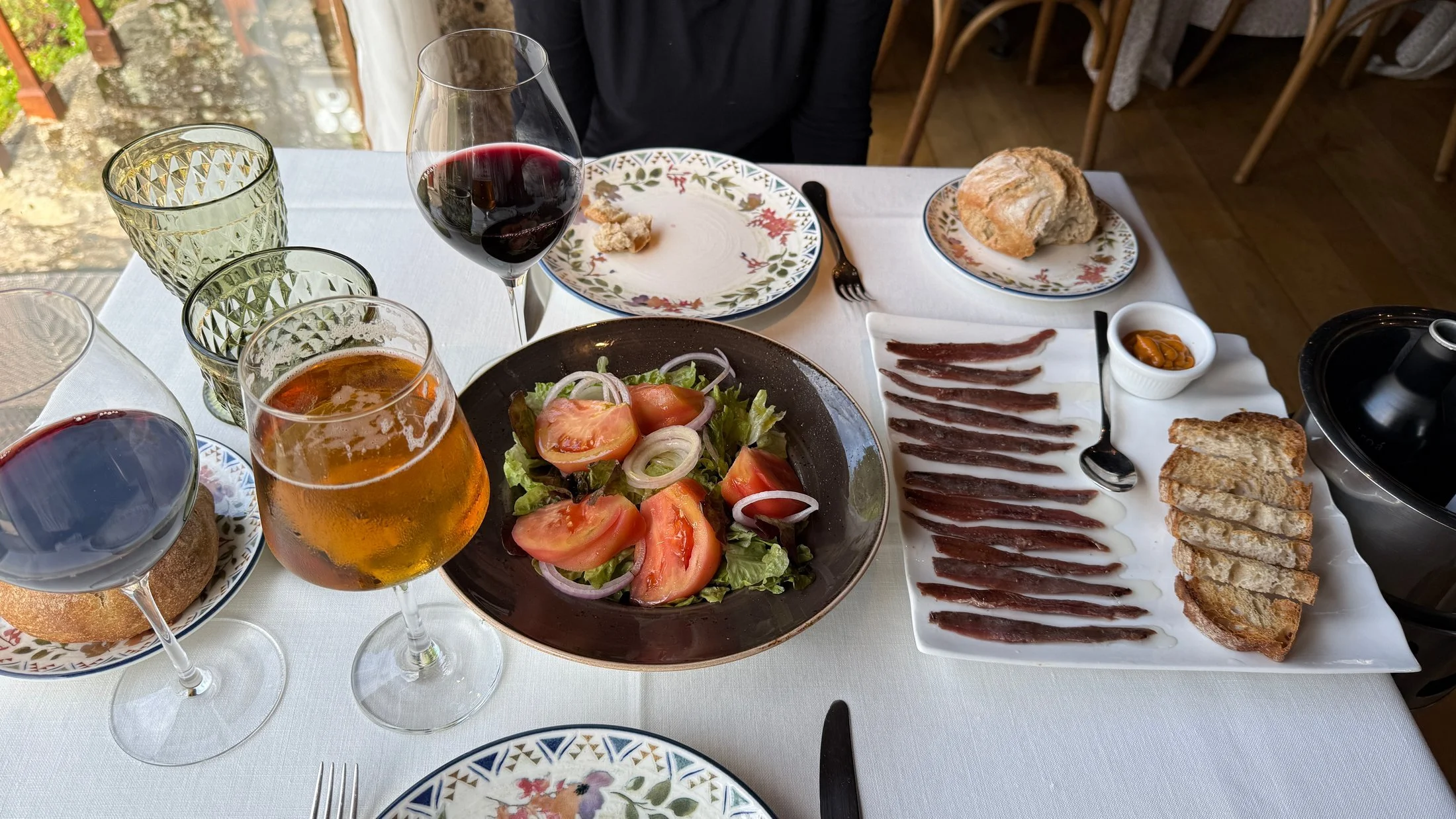
Dinner at Fervenza Casa Grande in O Corgo, Galicia, where I stayed the night.
Issue #20
After I ran across Europe last year, several people asked for recommendations of “must-stops” along the Camino de Santiago, where I spent 24 days of the 99 it took me to get from Portugal to Turkey on foot.
I launched in Porto, Portugal, staying on the Coastal Camino route for 172 miles into Santiago de Compostela, which is traditionally the end point for most pilgrims. But I continued on through northern Spain into the French Pyrenees, before peeling off into Italy and beyond.
There are far too many highlights from the entire route to cover in this issue, so I decided to share my notes on the Spanish stretch only, which was truly a feast for the stomach, the imagination and the eyes.
Here are a few of the moments that stayed with me.
O Porriño: An Italian Surprise
Restaurante Casa Di Mili is a charming and cozy spot nestled in the heart of O Porriño, a historic municipality in the province of Pontevedra. This was one of the best Italian meals I can remember — the penne arrabbiata had real heat, and the homemade gelato was the perfect finish to a long day.
Santiago de Compostela: Scenery That Slows You Down
Galicia’s grand capital is famous worldwide as the Camino’s final destination. And what exquisite sights and treats await the tired and hungry foot soldiers!
The Old Town is a UNESCO World Heritage Site with a dazzling array of Romanesque, Gothic and Baroque architecture, all of which are incorporated in the city’s eponymous cathedral.
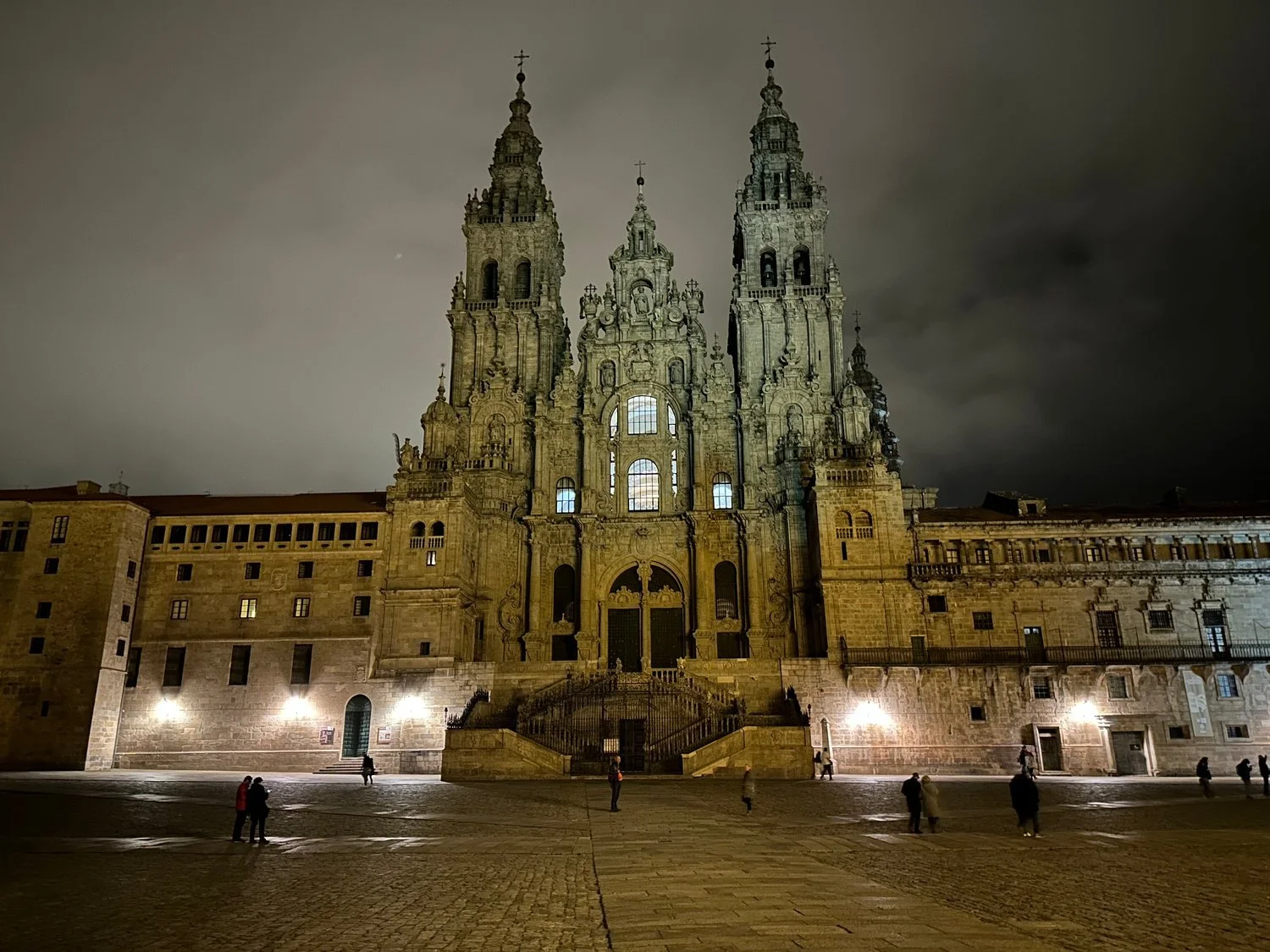
Santiago de Compostela Cathedral.
But there’s also a contemporary art scene and thriving food landscape. My favorite restaurant here was A Noiesa, a family-run casa de comidas that focuses on honest, no-frills Galician cooking centered around seasonal, locally sourced ingredients from land and sea. I feasted on fried eggplant with honey, a beef fillet and a bottle of Emilio Moro, a fitting toast to the end of the road. Or, my beginning.
Samos: Untouched By Time
About 80 miles east, a stop here is a must to see the monumental, 6th-century Royal Monastery of San Julián that remains inhabited by resident Benedictine monks. After passing through this town, I wrote in my blog: “The Spain and Camino I remember and love.”
Cruz de Ferro: Unburden Yourself
If you saw the Martin Sheen movie, “The Way,” which was set on the Camino, you might remember a tall iron cross with a huge pile of stones at the base, standing atop Mount Irago. Following a Celtic and Roman tradition, pilgrims place a stone they’ve been carrying with them atop the pile, as a symbol of leaving one’s burdens behind and beginning anew.
It’s a wonderful place for contemplation, and in the village below, there was a 12th-century church and a tavern that felt medieval.
Astorga: From Gaudí To Sweet Treats
Striking architecture by Antoni Gaudí and a famous regional food scene make Astorga a welcome pit stop.
Gaudí’s Episcopal Palace of Astorga is a fairy-tale, neo-Gothic castle that sits directly adjacent to the historic Cathedral of Santa María de Astorga. In my humble opinion, the palace beats the cathedral.
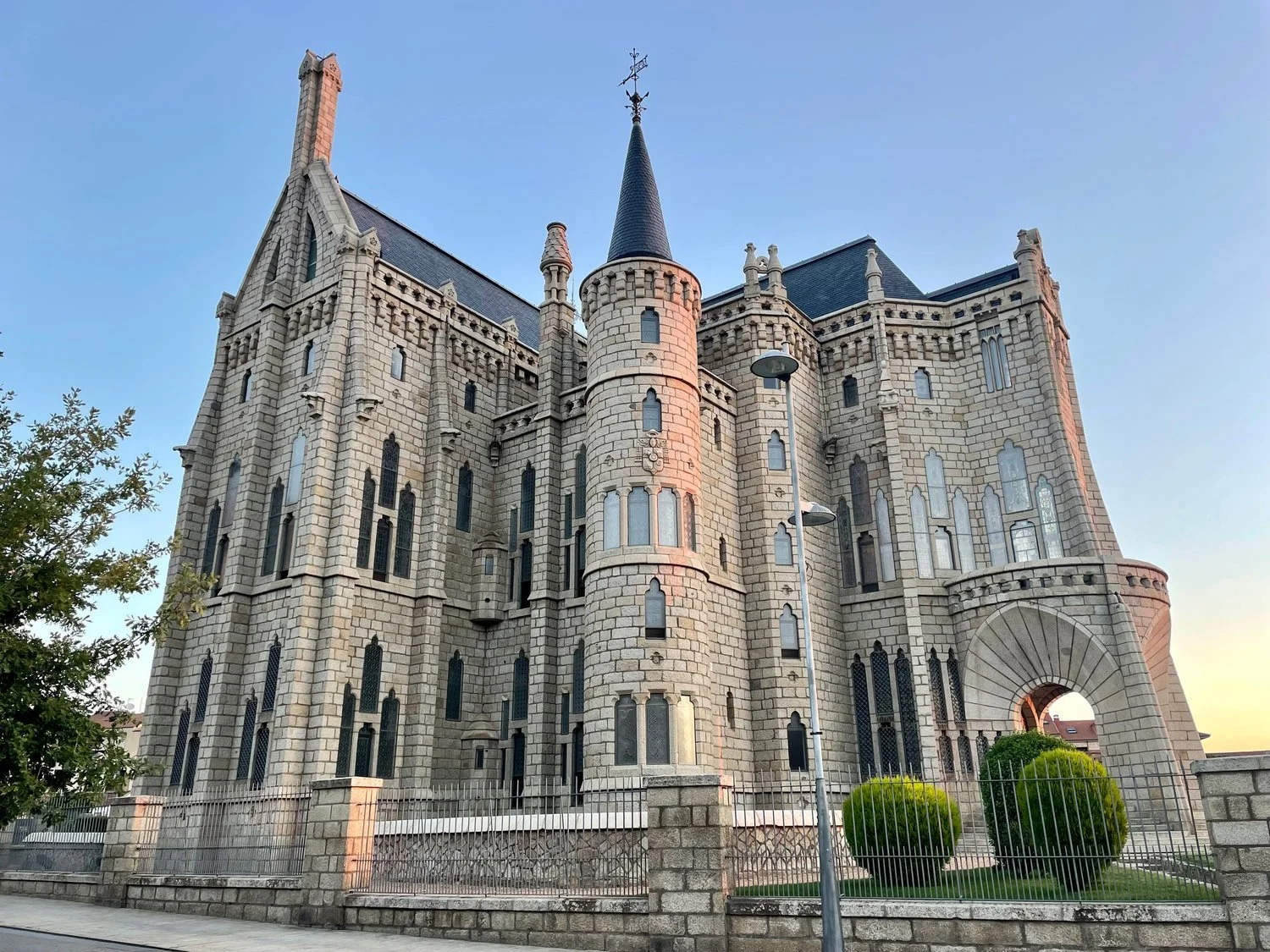
Gaudí's Episcopal Palace in Astorga.
After visiting, head into town for the local treats: Hojaldres de Astorga, honey-coated puff pastries, or Mantecadas, traditional sweet cakes. Both are ideal for recharging.
Hospital de Órbigo: A Jousting Bridge And Bustling Town Square
The 13th-century Puente del Paso Honroso is a long stone bridge with 20 arches. Here, in 1434, a Leonese knight decided to win the affections of a lady by challenging every knight who dared to cross, to a jousting tournament on the bridge that lasted a month. Buy into the folklore or not, the town still celebrates this medieval event with an annual reenactment over two days in early June.
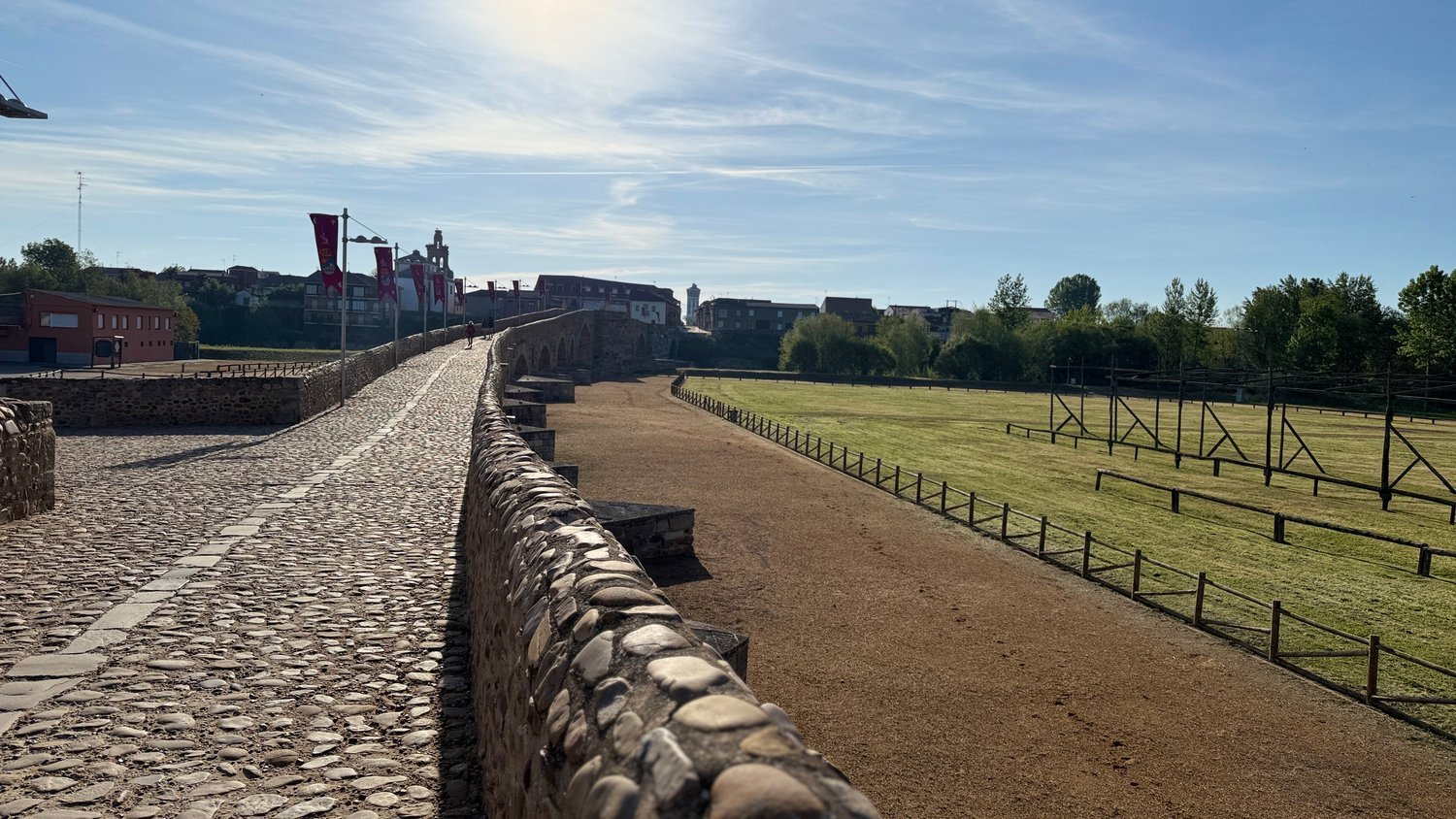
The Puente del Paso Honroso in Hospital de Órbigo.
Plaza Mayor, the town’s central square, is filled with cafes serving regional trout dishes, making it a vibrant and mandatory stop.
Burgos: Legendary
Once the capital city of the unified kingdom of Castile and León, today it’s a must-stop for a glimpse of the sheer medieval splendor of its cathedral — declared a World Heritage Site by UNESCO. Inside is the tomb of El Cid, the heroic Castilian knight.
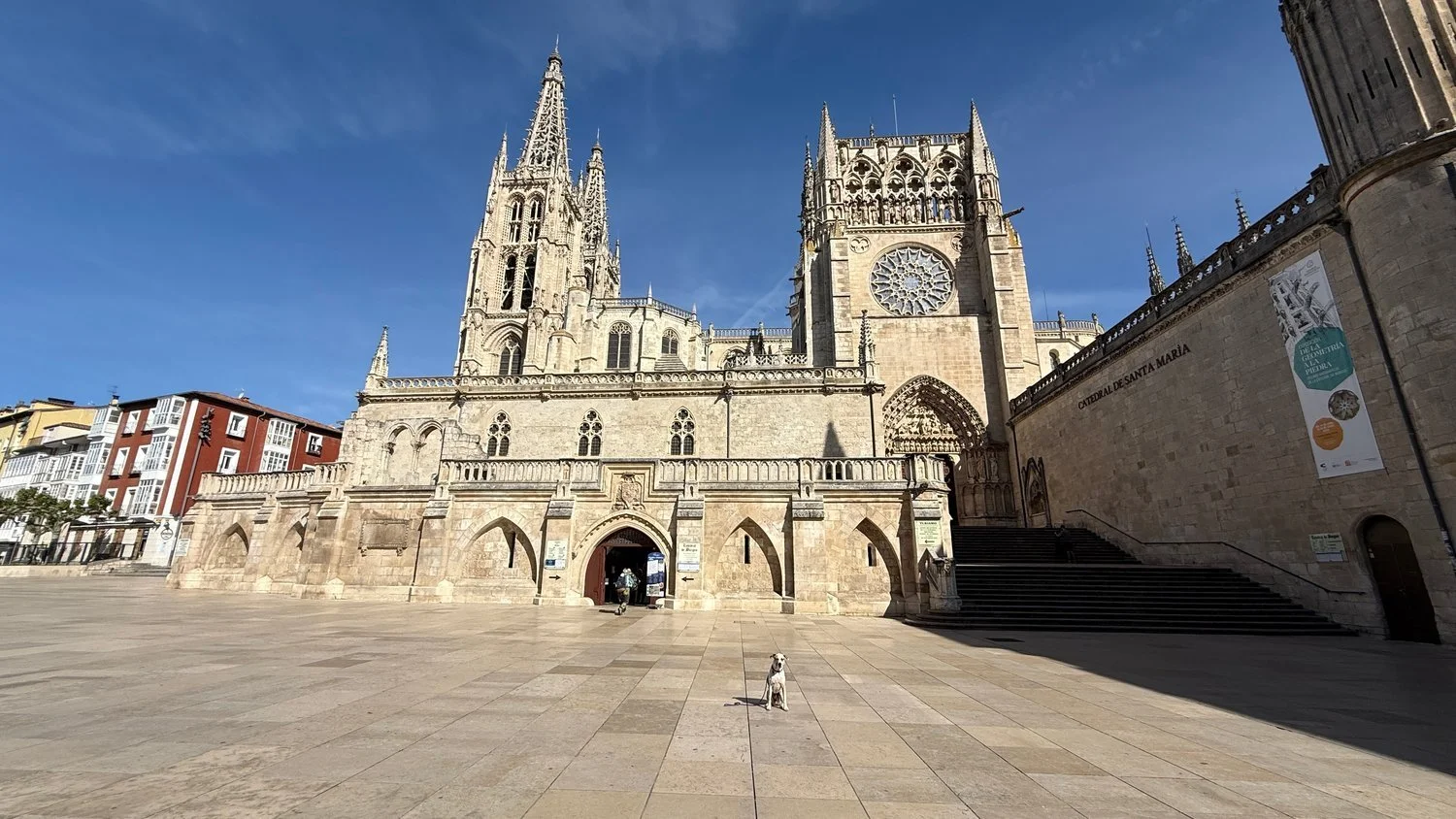
Jax in front of the Cathedral of Santa María in Burgos.
Another legendary highlight here: Rosca de Medina, a flattened local puff pastry topped with sugar.
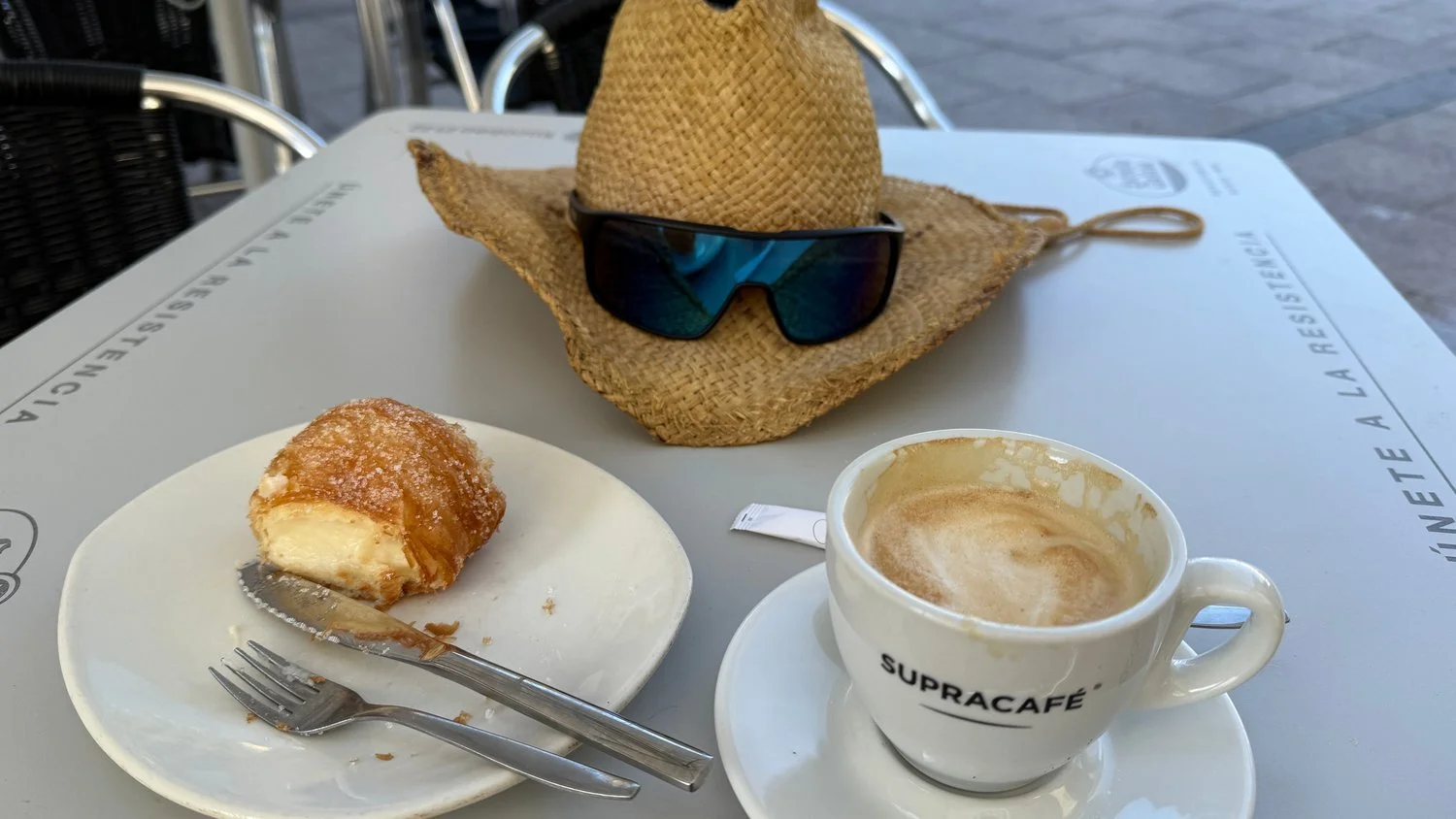
Coffee and a Rosca de Medina in Burgos.
Estella: Bao Buns And A Standing Ovation
Bar Restaurante BiEnara held a real surprise — a menu of Japanese and Mediterranean dishes. I ordered the duck confit bao buns and was so impressed that I walked into the kitchen and applauded the cooks. Don’t assume the Camino is only about traditional fare. Inventive kitchens thrive along the way, and the people running them love real appreciation.
Pamplona: No Bulls In Sight
Pamplona is famous worldwide for its annual San Fermín festival and the running of the bulls in July. I arrived in this ancient Roman city at dawn and had the old town and cathedral almost to myself.
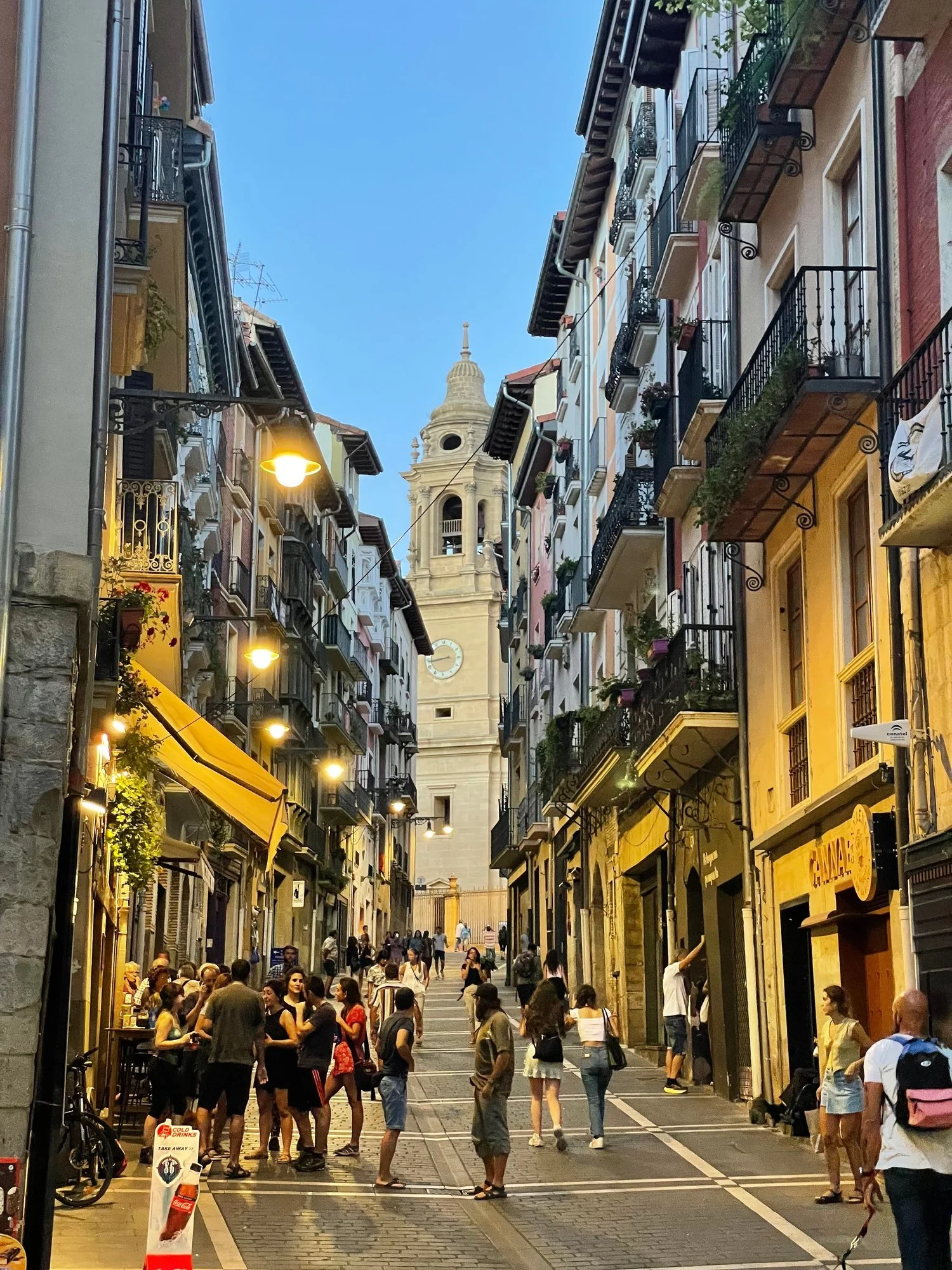
Pamplona's old town.
After wandering around, I rejoined the Camino, which slipped onto a shaded single track along the Río Arga. Peaceful and dappled, it was the kind of movement that made the whole pilgrimage feel profound.
Whether you come for faith, history, food or simply a very long walk, the Camino de Santiago offers small indulgences that are part of the rhythm of the trail: run, walk, contemplate, marvel, eat, repeat.
If you are heading to the Camino and need more suggestions, please do get in touch. Till then, buen Camino!
Hope to see you on the trails.
Cheers,
David.