Running To Redemption
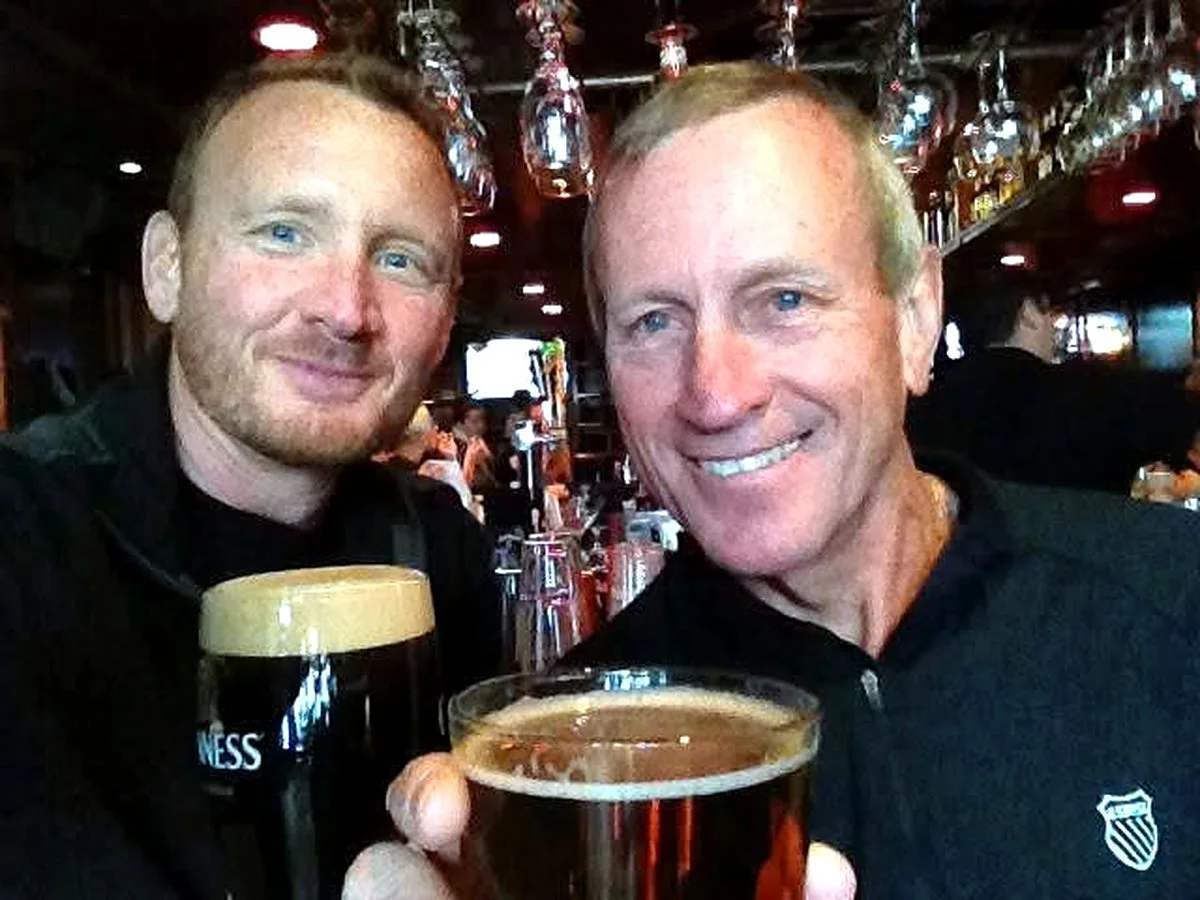
Mike Rouse and me on the eve of the 2013 Boston Marathon.
Issue #19
In January 1986, sitting in a federal prison in El Reno, Oklahoma, Michael Rouse reflected on the stark downturn his life had taken.
“I'm used to country clubs, not prison yards,” he said to himself, as he mingled with fellow convicts during their allotted hour of outdoor time.
He was 34, divorced with two kids, and at the helm of a successful construction company in his hometown of Abilene, Texas. After work, he’d hop on a Learjet with his rich friends to tee off at many of the country’s prestigious golf courses, followed by hard partying. He also had a burgeoning career in local politics — and a $1,000-a-week cocaine habit.
Mike was the classic work-hard, play-hard type, but the balance eventually tipped the wrong way. He ended up in prison, serving a five-year sentence for possession of a controlled substance. There, he faced some serious reckoning.
“I knew I had to do something to get my life together mentally, physically, emotionally, spiritually – in every way. I had to start over,” he said during a recent video call from Dallas, where he now lives.
He noticed a group of prisoners running around the circumference of the yard and learned that two and a half laps equaled two miles. So, he decided to join them.
“Well, I couldn't make a single lap without stopping because I was so out of shape. I weighed 121 pounds at the time. I was a dead man walking.”
A born competitor, having played collegiate golf, Mike refused to quit. “I kept going. I would run, walk, run, walk till I could do two miles. Next day, I'd go out again and I kept going every day until I could finally run the two miles without stopping,” he said, his face on my computer screen reflecting the pure joy he had felt after conquering something that had seemed impossible.
Fourteen months later, when his sentence was reduced and he was released on parole, he was running six or seven miles a day.
“Running got me through those 14 months,” he said. “Mentally, emotionally and physically, it gave me a healthy outlook on life.”
Today, at 74, he runs every single day, logging well over 3,000 miles a year.
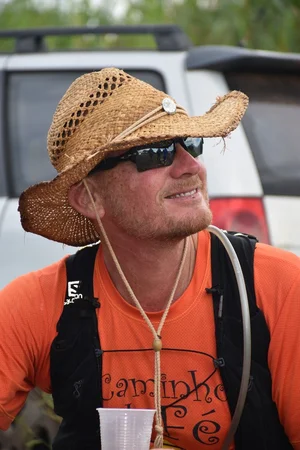
I first met Mike – Rousey as I call him – around 2011, when he was the vice president of running at K-Swiss, the athletic footwear brand. Back then, I was in my Ironman days and had also founded a compression sportswear company. We were at a sportswear expo in Denver, and after three 12-hour days on our feet manning our respective booths, we went out to dinner. I loved Rousey’s energy, his stories, the laughter and his warmth. Then he announced that he was running a marathon the next morning.
“You’re crazy!” I told him.
“Let’s go, Greenie!” was his reply, and there I was in the morning, running next to him for 26.2 miles. From then on, whenever we crossed paths on the expo circuit, we would run the event marathon the morning after, before heading home.
Since running his first marathon in 1988, right after moving to Dallas and working in a running store, Mike has completed over 200 marathons and competed in ultramarathons and triathlons. He’s also a three-time Ironman and a three-time world champion in the Ultraman, which covers running, swimming and biking over three days and 320 miles in Hawaii.
During our call last week he remembered the tipping point.
“I go back to that first day I ran — January the 16th of 1986. I remember it well because that day changed my life. I was in the pit of despair because I was broken, financially, spiritually, even physically. But I was freer on a run inside the walls of a penitentiary than I was out on the streets of Abilene or Dallas.”
The intersection between endurance sports and addiction is well documented. Many ex-addicts come to the endurance arena as part of their recovery because the goal-oriented nature of the sport is perfect for someone trying to rebuild themselves. Training provides the structure. The endorphins substitute for the chemical highs. The community replaces isolation. The purpose becomes a balm.
Mike admitted that running produces the same kind of hit that cocaine did for him. He understands he has essentially traded one addiction for another, replaced a self-destructive and stigmatized habit with a healthier, more positive practice.
“I'll never forget lying on my bed that first night after I tried to run in prison. It was a two-inch foam mattress on a steel platform. It was as hard as a rock. I was looking up at the ceiling and I was sore and hurting. But it was a good feeling. It felt good to hurt because I did something positive.”
It was, he said, the same high that he had experienced the first time he tried cocaine.
It’s been 41 years since his last line of coke. After selling his endurance sporting goods store in San Diego in 2019, Mike remains deeply connected to his faith, his family and two nonprofits he started over 40 years ago. He has coached many people towards marathons and ultra races; it’s a way of sharing his passion for running. Twice a week, he also leads a group of beginner runners from his church around a three-mile loop in Dallas.
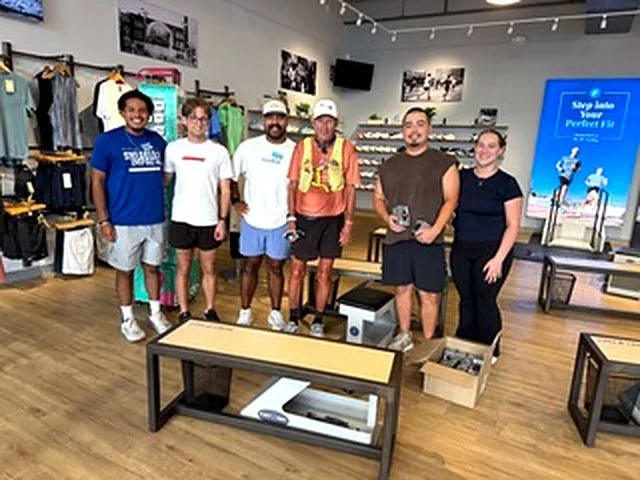
Mike Rouse at a local running store.
“But then I go home and later that afternoon, I might do another 10 or 12 miles,” he said, lighting up my computer screen with a smile. “I don’t have an agenda, Greenie. I run for the love, the passion and the feeling.”
The feeling of a free man.
Here's to the power of movement!
Hope to see you on the road.
Cheers,
David.
P.S. Follow him on Instagram @mikeyrouse52