Speed Kills (Joy)
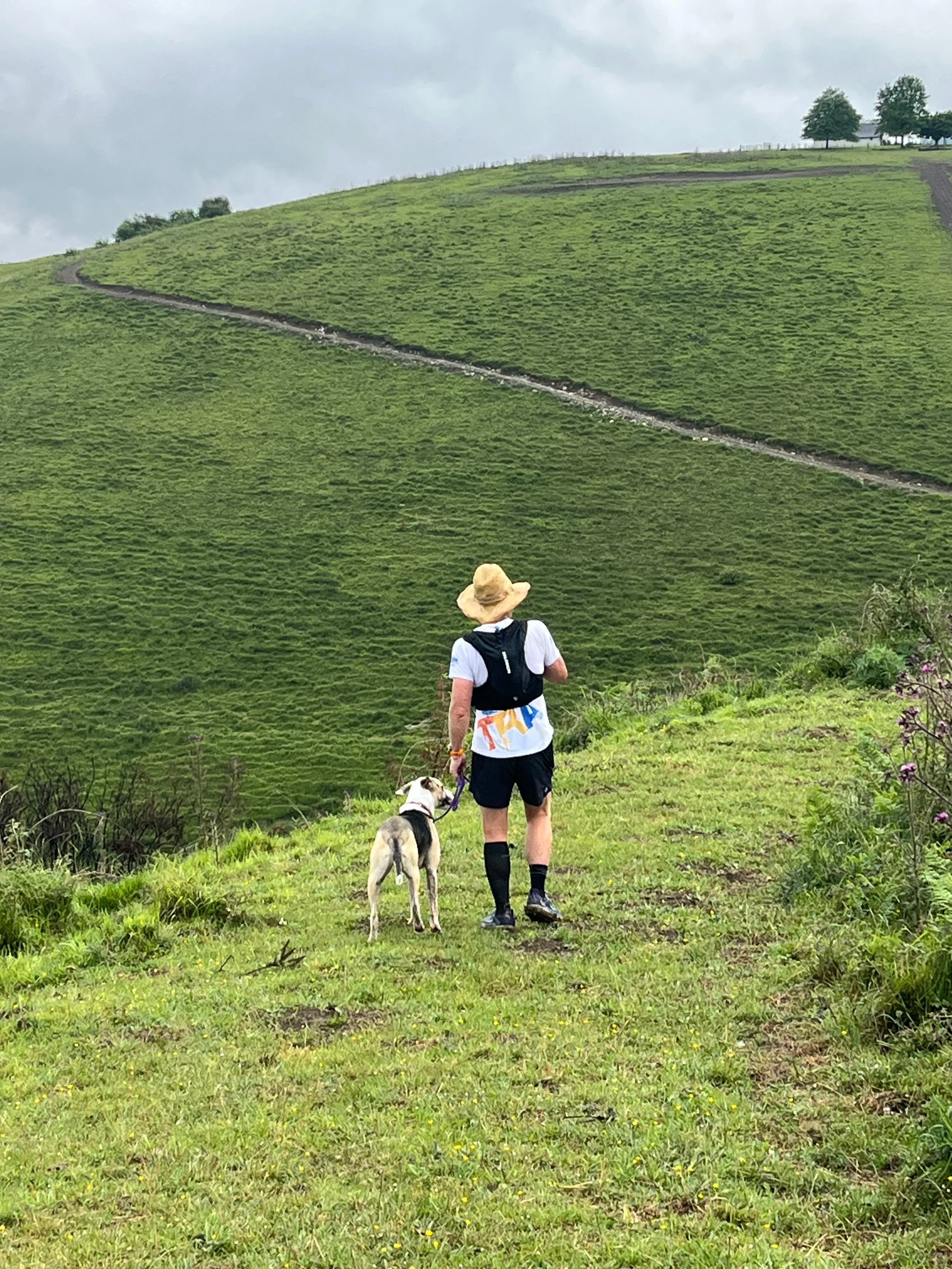
Jax and me on a climb above Ordiarp, in the Basque Pyrenees, France, on the run across Europe. June 3, 2025.
Issue #18
I’d like to get into a topic that has been popping up in the news lately: slow running.
As I've mentioned before, I run and train at a conversational pace - my “happy pace” — approximately 10 to 12-minute miles, or walk at 15-minute miles. During my longer adventures, like running across America and Europe, my daily pace averaged roughly 3 mph over 10 to 12 hours on the road, factoring in all my stops to eat, rest, take photos and shoot the breeze with people along the way.
At the core of my training is what I call the Half-Full Way (covered in issue #5 of this newsletter). This is my practice of training below my aerobic threshold, of never finishing a run at one hundred percent, which helps build my endurance, mitigate the risk of injury and keep my mind hungry for more.
This isn't about slowing down because I'm getting lazy or old. It's an intentional methodology that works for me, allowing me to run longer and farther, to show up again and again.
I was more than excited to see that my no-need-for-speed approach was recently backed up in two excellent articles, both of which are worth a read and attached below.
The Washington Post's article highlighted a recent MIT study, which discovered that a 10-minute slow run ("close to normal walking speed") almost immediately changed people's brain activity, improving their thinking skills and boosting their moods.
About two weeks later, the New York Times published "This Workout Strategy Could Help You Love Running," which focused on a run-walk method first popularized by the late Jeff Galloway, an Olympic and marathon runner, whom I met several times in Jacksonville.
"Jeffing," as it became known, is a pace-shifting technique that intersperses walking breaks with running intervals to help ward off fatigue and boost endurance. By slowing down intermittently, the article pointed out, you can effectively condition both the cardiovascular system and the muscles to perform more efficiently over longer periods.
Historically, running has been defined by speed. For many years I was obsessed with my personal bests and qualifying times, constantly chasing numbers. Slowing down represented a lack of progress, even failure.
It wasn't until I started undertaking longer, multi-day and -month adventures that I discovered the joys of moving slowly through the world. My runs became more enjoyable, more meaningful and meditative. At times, it felt like a throwback to my childhood, when days stretched out and felt epically long. I felt more human — not superhuman as I did during an Ironman — when I stopped during a run to simply absorb the scenery or sit down at a cafe for a cappuccino and croissant.
I own my own time now. No one dictates my pace. In this strangely peaceful way, I'm still doing what I love most — moving through the world — while making time for reflection, observation and whatever comes my way.
It's rare, in our crazy modern lives, to come this close to a stripped-back, primal state. Yet, that's precisely what happened once I began chasing the experience, not the outcome. In the depths of running slowly, I found a stillness and an awareness of existence that make it all worthwhile.
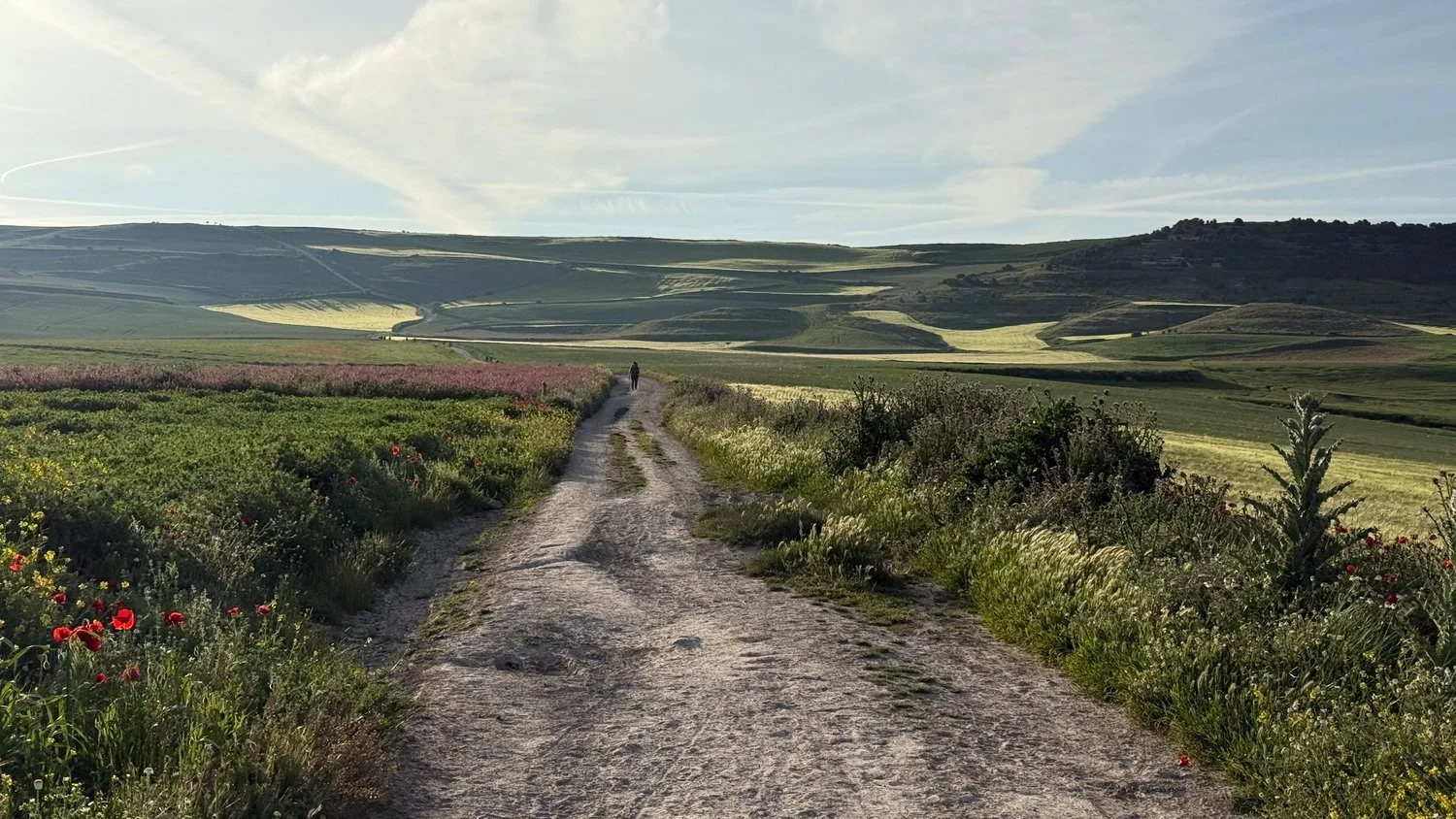
The Camino de Santiago near Castrillo Mota de Judíos, Burgos province, Spain. May 26, 2025.
This is the future I want.
Finally, I want to share the story of a man who has thoroughly embraced his inner tortoise – Martinus Evans, the Brooklyn, N.Y.-based founder of the Slow AF (As F**k) Run Club, which has over 200,000 members worldwide — runners who are routinely at the back of the pack. But that's okay, says Martinus. What's important is finishing the race – or your morning run, or walk – not the speed it takes you to do so. By promoting this message, he has become a highly influential voice in running circles, especially for those who feel marginalized by body type or ability. He works as a motivational speaker and running coach, and was featured on the cover of Runner's World magazine as well as in the New York Times.
Martinus also suggests conducting 70 to 80 percent of workouts at a conversational pace, which he very wittily calls his "sexy pace," because it reminds him of the slo-mo run that lifeguards do on Baywatch.
Here's to running slow, steady and sexy!
Hope to see you on the road.
Cheers,
David.